Frequently Asked Questions
Find answers to common questions about living at Skelton Gate. Can't find what you're looking for? Submit a question and we'll add it.
General
Who runs this website?
#
This website is run by a Skelton Gate resident in their spare time, as a volunteer community project. It isn’t affiliated with the developers, the management company or Leeds City Council — it’s just a neighbour trying to gather useful local information in one place.
The site is free to use and always will be. There are small monthly costs for hosting and for running Skelton, our AI assistant, which are paid out of pocket. In the interests of transparency you can see exactly what the site costs — and how much of that is offset by referral income — on the running costs page, with live figures. If the site has been helpful and you’d like to chip in towards those costs, you can buy me a coffee on Ko-fi — there’s absolutely no obligation.
There are also a couple of ways to help that cost you nothing extra. If you’re choosing an energy supplier, signing up via our Octopus Energy referral link gives us both a credit. And if you’re not familiar with TopCashback, it’s a free cashback website: you click through to a retailer from their site before you buy, the retailer pays them a commission, and most of it comes back to you as cash you can withdraw — broadband, insurance and energy sign-ups typically pay £20–50 each. Joining through our link helps the site a little too. One thing to note: cashback usually can’t be combined with a referral code, so for energy use one or the other — and as always, no obligation; shop around for whatever’s best for you.
Spotted something out of date, or got an idea for the site? Please use the Feedback page or the Residents’ Suggestions board — contributions and corrections are always welcome.
Where is the grit bin?
#
The estate’s grit bin is near the Evans show home. In icy weather, residents can help themselves to grit for paths and pavements nearby.
What's that smell? Landfill, drains and sewage explained
#
Occasional outdoor smells around the estate usually have one of three sources — and a persistent smell inside your house is a different problem worth reporting.
The former Biffa landfill (Skelton Grange)#
The neighbouring Biffa site stopped taking household waste around 2018, but it has been permitted since 2015 to process up to 50,000 tonnes of contaminated soil a year. Smells come and go with ground disturbance — stronger when soil is being worked, and weather-dependent. Landfill gas (methane) from the old tip is collected and burned to generate electricity rather than vented.
Biffa don’t work Sundays — a useful clue: if the smell disappears on Sundays, it’s probably the Biffa site.
Other outdoor sources#
- The pumping station on the bridleway.
- Knostrop sewage treatment works (towards Cross Green) on hot or windy days.
A sulphur / rotten-egg smell inside the house#
This is not normal and shouldn’t be lived with. In several homes (reported on the Avant side) the cause was a missing or faulty air admittance valve (AAV) on an internal soil stack — check boxed-in pipework and the loft — or a drainage defect. Report it to your developer’s customer care as a defect: it’s their responsibility to fix, and they have sent drainage and stack teams out for exactly this.
If you ever smell gas, that’s different — call the National Gas Emergency line on 0800 111 999 immediately.
Why is my mobile signal poor?
#
Indoor mobile signal is poor across the estate — there’s no nearby mast, and no booster infrastructure yet. New-build construction (foil-backed insulation, triple glazing on some plots) makes indoor reception worse than outdoors.
The fix: WiFi calling#
Enable WiFi calling on your phone — calls and texts then route over your broadband and indoor signal stops mattering. All the major networks support it on most modern phones (look in your phone’s mobile network settings).
Network experiences reported by residents#
- Worst here: O2 — and giffgaff, which runs on O2’s network.
- Reported OK: EE, Three (and Smarty, which uses Three), Vodafone (and Talkmobile — though weak downstairs for some), Tesco Mobile, iD Mobile.
If you’re switching networks, most offer a free trial SIM or short contract — test it in your own house before committing.
My kitchen knife is stuck in a sweet potato, how do I get it out?
#
Try running it under hot water for a while. This should soften the potato enough to free the knife.
Maintenance
My heating isn't working properly - what should I do?
#
Contact your builder’s customer care team, they should have verified the heating is working.
- Check the batteries in your room thermostat first — a dead thermostat is the single most common cause of “no heating or hot water”.
- Check your boiler pressure (should be 1-1.5 bar when cold).
- Check that thermostats are set correctly. If you have multiple thermostats, their zones may be reversed!
- If some rooms are warmer than others, you may need to turn the radiator thermostat down in those rooms to help balance the heat.
- Ensure the timer/programmer is set appropriately. Most controllers also have an “extra hour” / boost button for one-off heating or hot water outside the schedule.
- Try resetting the boiler (check manual).
- Zone valves (3 port valves), which divert water between heating and hot water, are a known weak point on the estate — sticking valves are a common defect and plenty have been replaced under warranty. If these are not installed next to your boiler, they may be underneath the bath. Symptoms: hot water but no heating (or vice versa), or heating that stays on when it shouldn’t.
Emergency gas issues: If you smell gas, call the National Gas Emergency Service on 0800 111 999 immediately.
Mould, condensation and tiny insects — is this normal in a new build?
#
New builds hold a lot of construction moisture and take a year or more to dry out. Some of what you’ll see is normal — and some of it is worth pushing your developer about.
Mould on skirting boards or behind kitchen units#
Common in year one where drying-out meets cold spots. Ventilate well and wipe it down — but if it keeps returning, report it to your developer’s customer care: developers here have replaced mouldy skirting boards and kitchen unit backs, and have supplied dehumidifiers on request. Don’t accept “it’s just condensation” for recurring mould in the same spot.
Tiny light-brown insects (booklice)#
Booklice thrive on the microscopic mould that grows on damp, drying plaster. They’re harmless and disappear once the house dries out — they’re not a hygiene problem. In summer heat you may also get thunder flies (tiny black slivers) coming in from outside; fly screens on windows are the practical fix.
Cracks in plaster#
Small shrinkage cracks are normal as the house dries and settles — see the Welcome Pack section on new-build quirks. Report them as you find them, but expect the developer to fix them in one go at around the 12-month point, once settlement has largely finished. The rule of thumb for when a crack is serious rather than cosmetic: wider than a pound coin’s edge (about 3mm) — report those promptly and mention the width.
Why is my new lawn dying? Leatherjackets, clay and drainage
#
New-build lawns on the estate suffer from three common problems — here’s how to tell them apart.
Brown, patchy, dying grass — probably leatherjackets#
Leatherjackets (crane fly / daddy-long-legs larvae) eat grass roots and are widespread on the estate. Telltale signs: patches of grass that lift away easily with no roots, birds pecking at the lawn, and the grubs surfacing onto patios when it rains.
Treatment: nematodes (a natural, pet-safe biological control, widely available online):
- Autumn is the best time to apply — it catches the newly hatched larvae.
- Spring treatment also works — use it at double strength.
- Reseed straight after treating, and water daily while the new seed establishes. One resident’s lawn went from ruined to recovered in about a month doing exactly this.
Boggy garden — clay soil and compaction#
The estate sits on clay, and gardens were compacted during construction. Liquid gypsum (pet-safe) helps break up clay and improve drainage. Aerating with a fork before applying helps it penetrate.
Turf laid over rubble — that’s a snag, report it#
If your turf was laid over builder rubble, glass or nails, that’s a reportable defect, not something to live with — developers here have replaced turf and cleaned gardens after complaints. Report it to your developer’s customer care in writing.
And one general tip: don’t mow new turf for around 8 weeks after laying — let it root first.
What paint and patio slabs did my developer use?
#
Handy for touch-ups and extensions — these are the materials residents have confirmed with the developers:
White wall paint#
- Avant — Crown Trade Covermatt Obliterating Emulsion
- Evans — Armstead Matt white
- Countryside — Johnstones Trade white
Patio slabs#
- Avant and Countryside — Marshalls Riven Buff. Buff riven slabs from B&Q (around £4.50 each) are a close match, as is the Bradstone Peak Riven Buff 450×450 from Travis Perkins.
- Evans — a yellower-toned slab; no confirmed retail match yet.
Tip: while the developers are still building, it’s worth asking at the site office — residents have been given part-tubs of the paint and the odd spare slab just for asking.
Solar iBoost showing lost signal
#
If your Solar iBoost unit is showing “Lost Signal from Sender”, the batteries may need replacing in the sender unit.
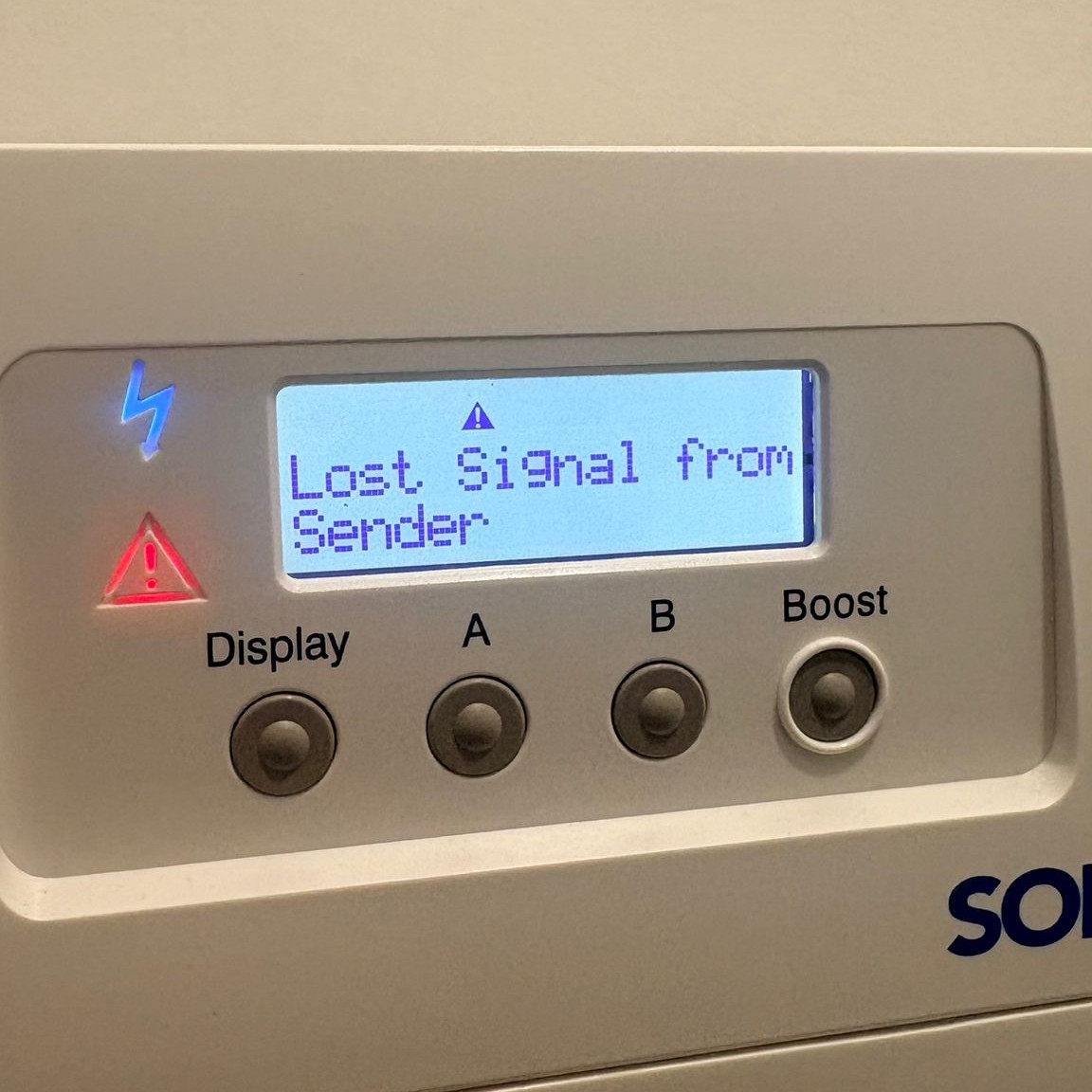
The sender unit should be the clamp device in your electricity meter box. It takes 2 x AA batteries.
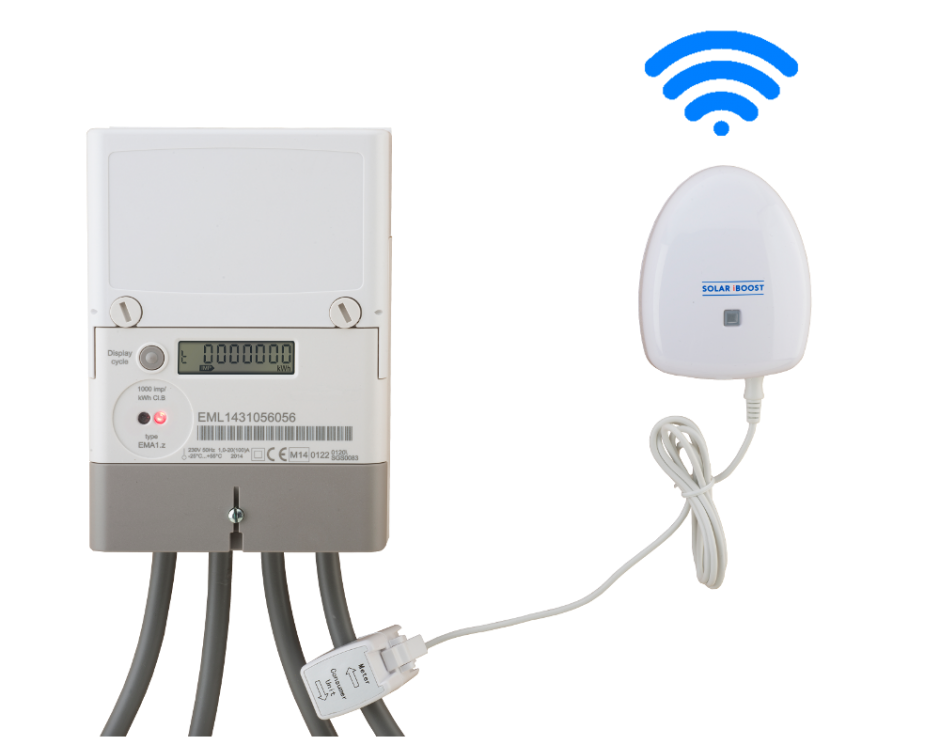
- With the Sender in hand and batteries fitted stand about 1-2 metres away from the Solar iBoost main unit.
- Press and hold button “B” on Solar iBoost for 5 seconds.
- Press and hold the button on the Sender until the screen displays Pairing Successful. This may take up to 10-15 seconds. Repeat if necessary.
- With pairing established place the Sender unit back in the mounting location (utility meter).
Management
What does my service charge cover?
#
Update: Estate management and maintenance fees have been waived until Phase 2 of the development is complete. Full details are still to be confirmed — this page will be updated when more information is available.
When charges do apply, your annual service charge will cover the costs of managing and maintaining the communal areas of the estate. This typically includes:
Grounds Maintenance:
- Grass cutting and hedge trimming
- Planting and landscaping
- Weed control on paths and roads
Cleaning:
- Communal bin areas
- Pathways and roads
- Play equipment
Repairs & Maintenance:
- Street lighting repairs
- Path and road repairs
- Fence and gate maintenance
- Play area maintenance
Management:
- Estate management services
- Insurance for communal areas
- Administration costs
When charges apply, they will be calculated annually and may vary based on actual costs incurred. You’ll receive a breakdown from the management company. For queries, contact the estate management company via the Contacts page.
Moving In
Why haven't my title deeds come through yet?
#
First registration of a new-build property with HM Land Registry is slow — 9 to 22 months is typical, and nothing is wrong if yours takes that long. You don’t need to chase it: your conveyancer submitted the application when you completed, and they’ll be notified when registration finishes.
If you have a genuine need for it sooner — for example you’re selling, remortgaging, or facing financial hardship — your conveyancer can ask HM Land Registry to expedite the application, which is free and brings the wait down to around 10 working days.
Your ownership is legally protected from the day you completed regardless — the registration backlog doesn’t put your purchase at risk.
My new address isn't recognised — what do I do?
#
Brand-new addresses take a while to reach every database. Most systems pick up new addresses within 6 weeks to 2 months of Royal Mail listing them — here’s how to smooth the gap.
Get listed with Royal Mail first#
Check the Royal Mail postcode finder and submit your address if it’s missing — you can do this before you move, and it’s the master record most other databases sync from. See the Welcome Pack for the full before-you-move checklist.
Known workarounds while databases catch up#
- DVLA (driving licence and V5C logbook) — the online service often fails against new addresses. Do it by post instead; it takes around 2 weeks.
- Takeaway and delivery apps — enter the postcode manually and drop a map pin on your house rather than relying on the address lookup.
- No postbox yet — there’s no post box on the estate, and one won’t arrive until the roads are adopted by the council (typically 3–4 years on a new estate).
The postcode is LS9#
Skelton Gate addresses are LS9, even though the developer sales offices used LS15 and the services units are a mix — LS9 is the correct postcode to use everywhere.
Safety & Security
Smoke and carbon monoxide alarms — what should my house have?
#
Homes on the estate have hardwired, interlinked smoke alarms with battery backup — when one triggers, they all sound, and they keep working in a power cut.
Random beeping or false alarms: persistent unexplained triggering usually means a faulty unit, not something you have to live with — report it to your developer’s customer care and they’ll replace it under warranty.
Testing your alarms#
Because they’re interlinked, holding down the test button on any one smoke alarm should trigger all of them to sound — it’s worth testing periodically (monthly is a common recommendation). It’s still worth testing each alarm individually every so often too, in case one has failed silently.
Some homes also have a central test panel on the landing that tests every alarm in the house at once — check whether yours has one.
Carbon monoxide alarms: a CO alarm is required wherever there’s a fixed combustion appliance — for most houses here, that means the room with the boiler. Some homes have combined smoke/CO units fitted and some don’t, so check what you actually have (the label on the unit says). If there’s no CO alarm near your boiler, a standalone battery one costs £15–25 and takes two minutes to fit.
Transport
How do I claim the Travel Choices voucher?
#
As a Skelton Lakes resident you can claim one of two sustainable travel incentives — one per household:
- £500 Halfords cycle voucher — redeemable at Halfords stores or online for bikes, e-bikes, and cycling accessories.
- Free annual MCard — unlimited bus travel across West Yorkshire (valued at around £930). Covers virtually all ordinary stopping bus services; excludes late-night services and special events.
Only one option can be claimed, and only once per address. Vouchers and passes are non-transferable. The scheme runs until at least 2030, but vouchers must be used within 12 months of issue.
The MCard is free for the first year only — renewing it after that is at your own cost (currently £930 a year), so it’s worth using the free year to find out whether you’d really use it.
To claim, visit https://skeltonlakes-travelchoices.co.uk/redeem
Applications can take a while to process — residents have reported waits of around three months. If yours has stalled, chase it via residential@westyorks-ca.gov.uk.
Utilities
What council tax band is my property?
#
Council tax bands are set by the Valuation Office Agency (VOA) based on estimated property values as of 1 April 1991 — not current market value. Leeds City Council then sets the annual charge for each band.
Leeds rates for 2026/27#
| Band | 1991 value | Annual | Monthly |
|---|---|---|---|
| A | Up to £40,000 | £1,522.49 | £126.87 |
| B | £40,001–£52,000 | £1,776.23 | £148.02 |
| C | £52,001–£68,000 | £2,029.98 | £169.16 |
| D | £68,001–£88,000 | £2,283.73 | £190.31 |
| E | £88,001–£120,000 | £2,791.23 | £232.60 |
| F | £120,001–£160,000 | £3,298.72 | £274.89 |
| G | £160,001–£320,000 | £3,806.22 | £317.19 |
| H | Over £320,000 | £4,567.46 | £380.62 |
Rates change annually — check Leeds Council Tax for the latest figures.
Check your band#
Our Property Data page lists the band for every property on the Skelton Gate estate, sourced from the VOA, alongside its EPC rating, house model and sold prices. You can filter by postcode, street, band or model to find your property quickly.
If your property isn’t listed yet, use the government’s Check your Council Tax band tool as a fallback.
Just moved in and no band yet?#
New builds often aren’t banded immediately — the VOA can take 6–12 months to assign a band after you move in. Two things to do in the meantime:
- Register with the council anyway — register for council tax as soon as you move in; you won’t be billed until the band is set. If you’re moving from elsewhere in Leeds it’s a change of address rather than a new registration, and you can file it up to two weeks before your move-in date.
- Put the money aside — when the band arrives, your first bill is backdated to your move-in date. Check what identical homes pay on our Property Data page and set aside that monthly amount from day one, so the catch-up bill isn’t a shock.
Think your band is wrong?#
It’s worth checking, particularly for new-build properties, which are sometimes assigned a provisional band. The process is:
- Check comparable properties — our Property Data page includes the house model for each property. Filter by your model to see what band other identical homes on the estate have been assigned. If yours is higher than properties of the same type, you may have grounds to challenge.
- Contact the VOA — start a formal Check at gov.uk/challenge-council-tax-band. This is free and done online.
- Challenge and Appeal — if the VOA doesn’t agree after the Check stage, you can escalate to a formal Challenge, and beyond that to an independent Appeal.
Timing matters. If you’ve been paying council tax on the property for less than 6 months, you can submit a formal challenge outright; after that you’ll need supporting evidence for the Check stage — so if the band looks wrong, act soon after moving in. Decisions officially take around 28 days, but residents have waited up to a year, so don’t read anything into a long silence.
What happens if your band changes. If your band is corrected down, you are refunded the difference for the period you were overpaying. If it is corrected up, you pay the higher amount from that point forward only — the increase is not backdated. This is different from a new build being banded for the first time, which is backdated to your move-in date (see above).
The main thing to weigh is the effect on your neighbours. A challenge can prompt the VOA to review similar properties nearby, and their bands can move up as well as yours moving down. Their increase would not be backdated either, but they would pay more from then on. On a street of near-identical homes that is worth thinking about before you start.
New residents moving into a property are one of the most common triggers for a band review, so it’s a reasonable thing to check when you first move in.
MoneySavingExpert’s council tax band guide walks through the comparison checks in more detail.
Why can't I get any TV channels?
#
If you can’t tune in any Freeview channels, it’s very likely there’s simply no aerial connected — not a fault.
On Avant homes, there’s a bare coax cable pre-installed in the loft ready for an aerial, but no aerial was actually fitted — it was only ever an optional extra at build, and many residents didn’t realise this until they tried to tune their TV in. The same may well be true on Evans and Countryside homes too, since it’s a common new-build approach — check your loft for an unconnected coax cable before assuming there’s a fault.
Fixing it#
- Buy a loft-mounted aerial (around £30) and connect it to the existing coax — no need to go on the roof, and no new cabling required since the run to your TV points is already in place.
- Alternatively, skip the aerial altogether and use a streaming service like Freely (free, works over your existing broadband, carries the main UK channels live) or catch-up apps instead.
Who supplies my gas and electricity?
#
New homes are set up with British Gas as the default gas and electricity supplier (confirmed by Avant and Evans buyers). You’re free to switch — but read the warning below first.
Before you switch: check your meters are really yours#
Plot numbers and house numbers got mixed up on the national database for several homes on the estate — duplicate house numbers, and meters registered against other plots or even other towns. If you switch supplier against the wrong meter details, you can end up paying a neighbour’s bill: one household paid someone else’s gas for weeks after a switch was set up against the wrong meter.
On day one: photograph both meters, including the serial numbers on the meter faces, and check they match what British Gas has registered for your address before you switch to another supplier.
EV owners#
Many residents with electric cars use EV tariffs with a cheap overnight window (typically around 23:30–05:00) — worth comparing once your meter details are confirmed correct.
For water, see Water bills, meter readings and leaks — you cannot switch water supplier.
Considering Octopus Energy?#
If you’re switching and don’t already have a preferred supplier, please consider Octopus Energy — using that referral link gives us both a credit, and helps a little towards this site’s hosting costs. No obligation at all; shop around and pick whoever’s best for you.
How do I get rid of garden waste? Will we get brown bins?
#
There is currently no garden waste (brown bin) collection route on the estate.
In spring 2026 Leeds City Council announced that every Leeds household without a brown bin will eventually get one for combined food and garden waste, but there is no confirmed rollout date for Skelton Gate yet.
In the meantime#
- Book a free collection — Leeds City Council will collect up to 4 lots of double-bagged garden waste, up to 4 times a year, for households without a brown bin. Book at leeds.gov.uk/residents/bins-and-recycling/garden-waste-collections. Slots are limited — if none show, try again later.
- Take it to the tip — the nearest household waste recycling centre is Middleton (Holme Well Road, LS10 4TQ). Check opening times before you go; vans and trailers need a permit.
- Compost it — a compost bin swallows grass clippings and most garden waste.
- Have it taken away — All Year Gardener, listed in our local businesses directory, removes garden waste.
If you’d like to see the brown bin rollout reach Skelton Gate sooner, ward councillor Mark Dobson (mark.dobson@leeds.gov.uk) has been responsive to residents on bin issues.
My bin wasn't collected — what should I do?
#
First, check your address is actually on the collection route with the council’s bin day lookup. If your address isn’t listed, see How do I get a black/green bin? — new homes can take a while to appear on the route, and submitting your address to the council may speed it up.
Also check it isn’t a bank holiday week — collections shift by a day; the bin collection page shows any upcoming changes.
Reporting a missed collection#
Report it to Leeds City Council within a day or two:
- Bin collection problems — what the council will and won’t return for
- Report a missed collection using the online form at services.leeds.gov.uk/MissedCollection
If access was blocked#
When roadworks or parked cars block a street, crews generally only come back for a whole street that was missed — not individual bins. If your usual collection point is blocked, wheeling your bin to the end of the street on collection day is the safest bet.
Water bills, meter readings and leaks
#
Who supplies my water? It depends on who built your home:
- Avant homes — IWNL (Independent Water Networks Ltd)
- Evans homes — Last Mile Water
- Countryside homes — IWNL (Independent Water Networks Ltd)
Unlike gas and electricity, you cannot switch water supplier, so it’s worth getting your billing right with the one you have.
Where is my water meter?#
Under the small grate on the pavement in front of your house (not the larger one). The lid lifts with a flat screwdriver or an old knife, and there’s a foam plug underneath to remove. The chamber is often muddy or waterlogged, so it’s easiest to take a photo of the reading on your phone.
Submit meter readings monthly#
IWNL and Last Mile Water only officially read meters twice a year (June and December) and estimate your bills in between. Estimated bills have caught residents out badly — monthly payments of £80–£125 before a real reading brought them down. Around £50 a month is typical for two adults, and a family of four uses roughly 12 cubic metres a month.
Submitting a reading regenerates your bill, so send one every month via your supplier’s website or app to keep bills accurate and avoid a large catch-up bill or an inflated direct debit.
WaterSure — a cap on your bill for larger families#
If someone in your household receives Child Benefit for three or more children under 19, you can apply for the WaterSure scheme, which caps your annual bill — regardless of income. Ask your water supplier for the application form.
Think you have a leak?#
Turn off the internal stop tap (usually under the kitchen sink), then check the meter. If it is still counting up, there’s a leak between the meter and the house. On a new build, a leak inside your property boundary is the developer’s responsibility — report it to their customer care team.
Supply problems#
IWNL publish outages and incidents at iwnl.co.uk/live-incidents.
How do I use the Deta.e car charger?
#
Most homes have a Deta.e charger, though some have an Evolo unit instead — check the branding on yours before following app instructions.
The charger should have been registered for you. In your welcome pack there should be a manual with a PIN stuck inside on one of the pages. If you don’t have this — or the PIN doesn’t work (wrong barcodes and PINs have turned up in some packs) — contact Avant customer care or the site manager, as the site registers the charger and holds the details.
Download the Autel Charge app on your phone. The charger has a QR code on it which you scan in the app and it connects via Bluetooth. You will need to enter the PIN to connect.
If you lose your QR code/PIN, you can also email a photo of the charger’s side label (showing the serial number) to technical@deta.co.uk, or call Deta support on 01582 544500.
By default the charger will require you to start charging via the app — it effectively has a “lock” needing manual approval for each charge. If you’d rather just plug in and go, enable the auto start toggle in the Autel app’s settings.
How do I get a black/green bin?
#
The site manager should provide bins for you. Leeds City Council delivered a stack of bins to the estate for the builders to issue. If yours is missing or damaged, the site office usually has spares — it’s worth asking there first.
New homes can take a while to be added to the collection route - first check your bin day to see if your address is listed. If not, submit your address to be added to the council’s database. They should then email Bin.Deliveries@leeds.gov.uk and copy you in once added, to request you are added to the collection route.
How do I check my Solar panels are working?
#
First check that nothing has been left switched off — installers sometimes forget to turn everything back on. There are four separate switches, any one of which can stop generation on its own:
- A circuit breaker in your fuse box/consumer unit, marked PV or Solar.
- An AC isolator switch next to the consumer unit, plus the solar generation meter alongside it — a good quick check is that this meter is powered on and its reading is increasing.
- A second AC isolator switch in the loft, next to the inverter.
- A DC isolator switch on the inverter itself, in the loft.
The inverter screen (again likely in the loft) may not be lit up if there isn’t enough sunlight currently.
Secondly, you will need to register for an export tariff or Smart Export Guarantee (SEG) with an energy provider. This does not need to be the same as your electricity provider. Octopus for example provide export tariff’s higher than the base SEG rate — if you don’t already have a preferred provider, please consider signing up via this referral link, which gives us both a credit and helps a little towards this site’s hosting costs (no obligation, shop around and pick whoever’s best for you). You will need the installation documentation (MCS certificate) which you should receive from the builder.
Check your MCS certificate carefully — several residents received certificates for the wrong plot or address. If yours doesn’t match your house, get it corrected before registering for SEG.
Getting the G98 (DNO) letter#
Some suppliers also ask for the G98/DNO notification letter before paying SEG:
- Avant homes — request it from the installer, Solar Site Systems, quoting your site and plot number (Avant customer care or the site office can provide their current contact details).
- Evans homes — ask the site manager to forward it.
- Countryside/Vistry homes — request it from the installer, Clarkson Evans.
- A site-wide G98 letter has been accepted by E.ON and British Gas, so don’t be fobbed off if a supplier initially says they need a per-property one.
Reading your export meter#
On Avant homes, the export reading is on the small LCD next to the fuse board — useful for checking your SEG payments are right.
Monitoring your generation#
Older Avant installations use SolaX inverters, which take an inexpensive WiFi dongle (around £20–25 online) — fit it and use the SolaxCloud app to see live generation. For a full picture of import, export and house usage you’d also need a CT clamp fitted, which is an electrician job.
Newer Avant builds use Viridian inverters, which also have a WiFi dongle available for monitoring — a little more expensive at around £45.
Can't find what you're looking for?
Ask Skelton — our AI assistant knows the estate inside out and can answer questions about bins, transport, local services, and more.
Ask Skelton →